
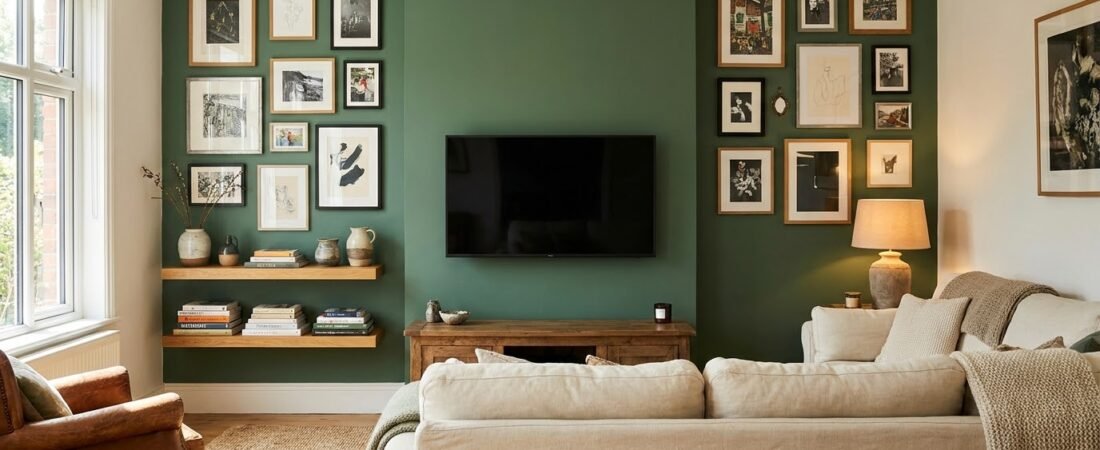
A big black rectangle is hard to ignore. The right TV decorative choices give your eyes somewhere else to land, so the screen becomes one part of the room instead of the main event.
You don’t need to hide your TV or give up movie night. You need to decorate around the TV area with layers, color, and light so the screen sits comfortably inside the design.
Why a TV Dominates a Room
A TV is the largest, flattest, darkest object in most living rooms. Everything else is smaller, softer, and textured, so the screen wins every time.
The fix is visual balance. Every good TV decorative plan does one of three things: shrinks the screen’s visual weight, surrounds it with competing interest, or disguises it.
1. Start With Placement Before Decor
Decor can’t fully rescue a badly placed TV. Check these first:
- Height: The center of the screen should sit near eye level when you’re seated. Mounting too high makes it loom over the room.
- Wall choice: Avoid the wall directly opposite a bright window. Glare makes the screen more noticeable even when it’s off.
- Size: Match the screen to the seating distance. An oversized TV in a small room will dominate no matter how you style it.
Short on floor space? Wall-mounting frees room for storage and decor. We cover this in our guide to small living room furniture arrangement.
2. TV Decorative Tip: Paint the Wall a Color That Absorbs the Screen
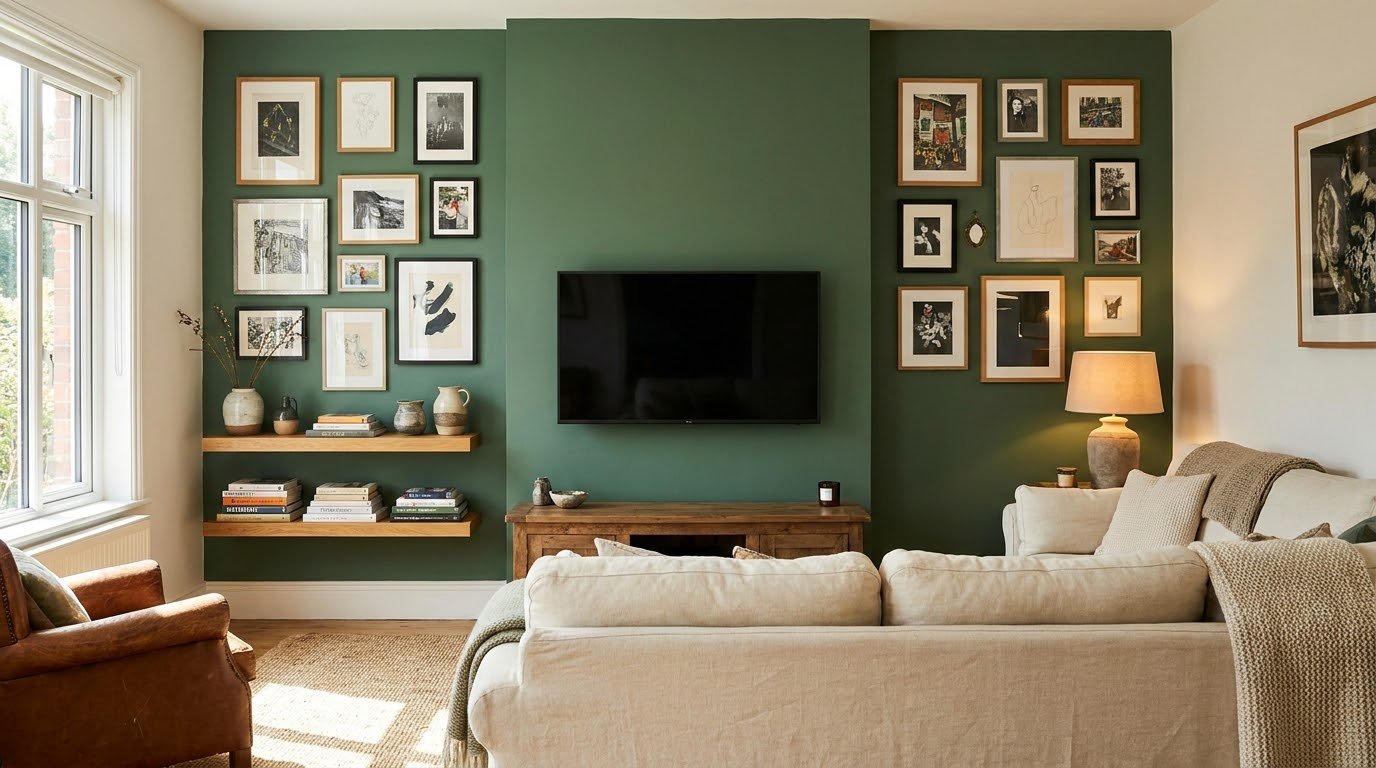
Here’s the most effective TV decorative trick, and it costs a can of paint. A deep, muted wall color (charcoal, forest green, navy, warm taupe) makes the black screen blend into the background.
A stark white wall does the opposite. It turns the TV into a dark hole in the room.
If you rent, try a peel-and-stick wallpaper or a large textured panel behind the screen. A matte finish works best, since glossy paint reflects the TV and draws attention.
3. Build a Gallery Wall or Art Layer Around It
Surrounding the screen with art is the classic way to decorate around the TV area. The goal is to make the TV look like one piece in a collection.
Try this approach:
- Mix frames in two or three finishes, such as black, brass, and natural wood.
- Keep spacing tight and consistent, roughly 2 to 3 inches between pieces.
- Cluster art on both sides, and add a few pieces above, so the TV sits inside the arrangement instead of beside it.
- Use dark or moody artwork near the screen so the contrast isn’t jarring.
Don’t try to match the TV’s exact edge. Overlapping the arrangement slightly into the screen’s footprint, with the TV mounted flush, reads more intentional.
4. Use Shelving to Frame the Screen
Built-ins or floating shelves on either side turn the TV into a feature within a wall of storage. This works well because shelves bring in books, ceramics, and plants, all of which compete for attention.
Keep these rules in mind:
- Leave some shelves open. A packed wall looks busy and makes the screen feel boxed in.
- Mix heights and textures: stacked books, a woven basket, a small lamp.
- Place your best objects at eye level, not only at the top.
No built-ins? Two matching bookcases flanking a mounted TV give a similar effect for much less money.
5. Style the Media Console: A Smart TV Decorative Spot
If your TV sits on a stand, the console is your best TV decorative opportunity. Style it the way you’d style a sideboard.
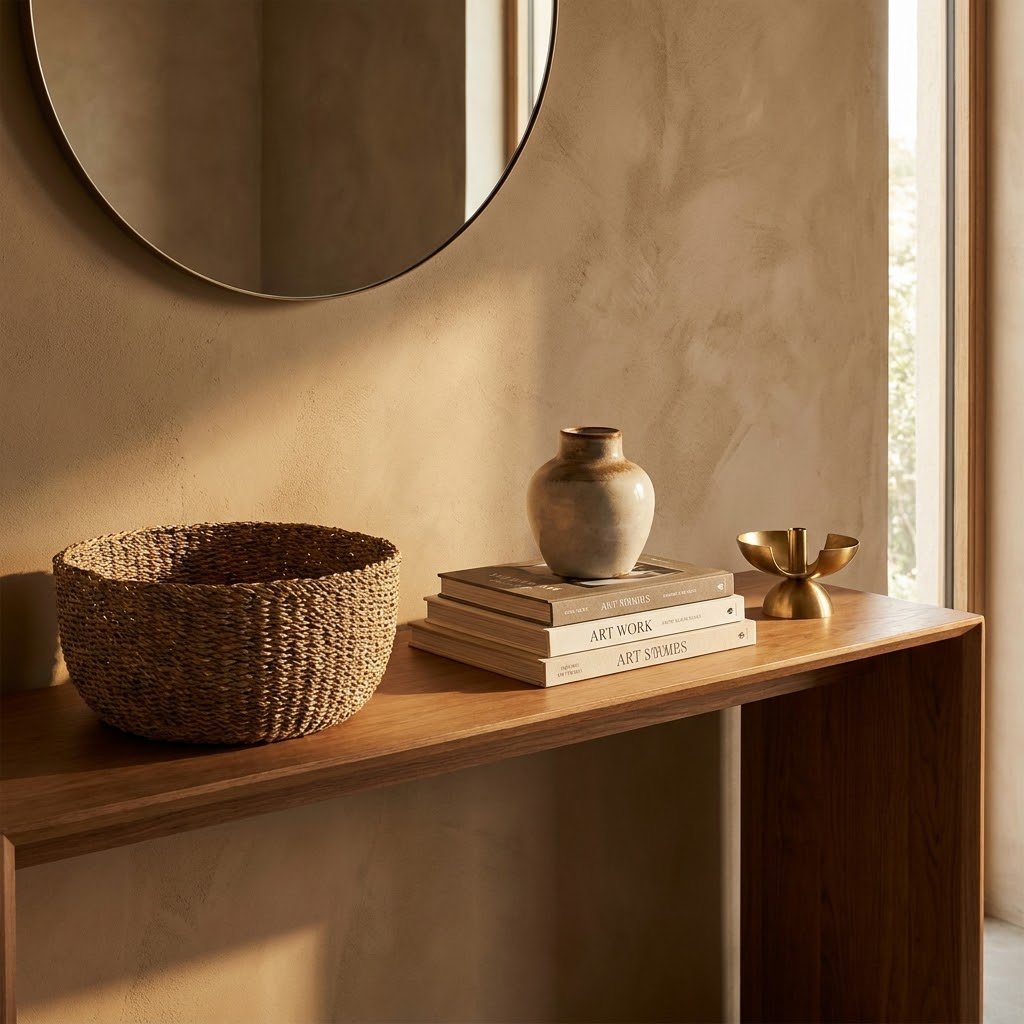
Follow the rule of three: one tall item (a lamp or vase), one medium (a stack of books with a small object), and one low (a bowl or tray). Keep the center area near the screen fairly clear so cables and the TV don’t look cluttered.
Hide the wires too. A cable cover or in-wall kit makes the whole setup look cleaner, which keeps eyes off the screen area.
6. Add Light So the Screen Isn’t the Brightest Thing
A TV is a light source, and a dark room makes it feel even bigger. Layered lighting spreads attention around.
- Bias lighting: An LED strip behind the TV softens the contrast between the screen and the wall, and it can feel easier on the eyes in a dim room.
- Table lamps: Place one on each side of the console or on nearby shelves.
- Picture lights: Highlight art near the screen so it competes for focus.
Warm bulbs give the room a cozier feel. If you’re after that mood overall, see our warm and cozy living room ideas.
7. Soften the Area With Textiles and Greenery
Hard edges are what make a TV look harsh. Soft materials around it balance that.
Hang curtains on the same wall to add height and texture. Place a large plant or a tall branch arrangement beside the screen. Add a woven basket or chunky throw nearby to bring in natural texture.
A plant in the corner beside the TV is one of the easiest ways to pull the eye away from the screen. It’s also budget-friendly.
8. Disguise It When You Want the TV Without It Dominating
Some rooms need the screen to nearly disappear. These options work best when the TV is off most of the day:
- Art-mode TVs: Some models display artwork when idle, so the screen acts like a framed print.
- Frame kits: A custom bezel makes a regular TV look like a framed piece.
- Cabinets with doors: Close them when you aren’t watching.
- Sliding panels or a hidden-screen mirror: Good for formal rooms or open-plan spaces.
Keep in mind that disguises add cost and a few extra steps each time you watch. If you use the TV daily, layering decor around it is usually the more practical route.
9. Common Mistakes to Avoid
- Centering everything around the TV. Furniture should face each other, too, not only the screen.
- Matching decor too closely. Black accessories alone can make the screen look heavier.
- Leaving the wall bare. Empty space around the screen makes it look bigger.
- Ignoring scale. Tiny frames next to a large TV get lost. Use a mix of sizes.
- Forgetting the room’s other focal point. A fireplace, window, or statement chair can share the spotlight.
10. TV Decorative Checklist to Decorate Around the TV Area
- Check height and glare.
- Pick a matte, muted wall color.
- Add art or shelving on both sides.
- Style the console in groups of three.
- Layer in lamps and bias lighting.
- Soften with plants and textiles.
- Hide cables.
Start with one or two changes and see how the room feels. The best TV decorative plan is the one you’ll actually keep up. For small spaces, our luxe small apartment decor ideas pair well with these tips.
Frequently Asked Questions
How do I decorate around a TV on the wall?
Surround it with a gallery wall, floating shelves, or flanking bookcases. Paint the wall a muted color and add lamps nearby so the screen blends in.
What is the best wall color behind a TV?
Deep, matte shades like charcoal, navy, forest green, or warm taupe make the screen less noticeable. Avoid bright white and high-gloss finishes, which highlight the TV.
How can I make a TV not the focal point?
Give the room another focal point: a large piece of art, a fireplace, a statement chair, or a bold rug. Then arrange decor so the eye has several places to rest.
Should I put decor on both sides of the TV?
Yes. Balanced decor on both sides makes the TV feel framed. It doesn’t have to match exactly; similar visual weight is enough.
Can I decorate a TV on a stand without a mount?
Absolutely. Style the console with the rule of three, add a tall lamp or plant on one side, and hang art above or beside the screen.
How do I hide TV cords?
Use a cord cover, an in-wall cable kit, or a cable box on the console. Tidy wires keep attention off the area.
Is it better to hide a TV or decorate around it?
It depends on how often you watch. If you use it daily, decorating around it is easier. If it’s used occasionally, a cabinet or art-mode screen can work well.